Landscape PortfolioExploreArboriculture PortfolioExplorePerennial Garden Maintenance PortfolioExploreForest and Field Reclamation PortfolioExplore
Home Landscaping and Design Experts
Hilltown Tree and Garden is seen as the premier horticulture firm in Western Massachusetts. They employ Massachusetts Certified Horticulturists, Massachusetts Certified Arborists, and Massachusetts Licensed Pesticide Applicators. The team has almost 100 years of professional horticultural and arboriculture experience.
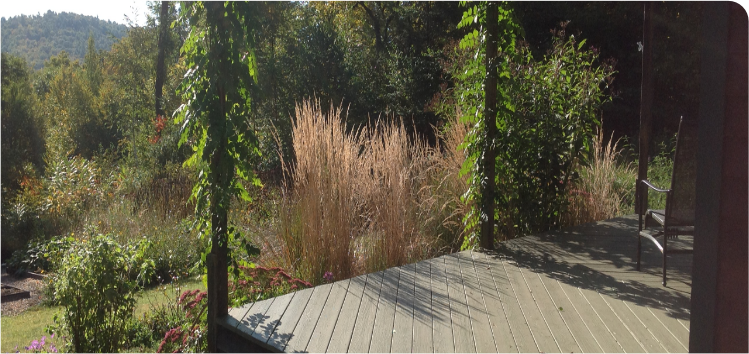
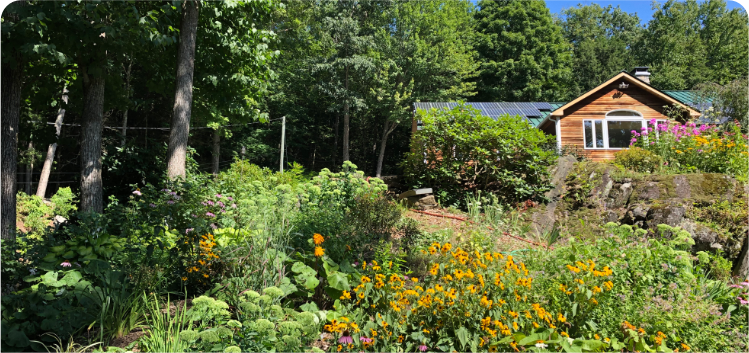
A successful design and installation depends on sound horticulture. Our designs focus on four season beauty, low maintenance, biodiversity, native plants, and long-term sustainability.
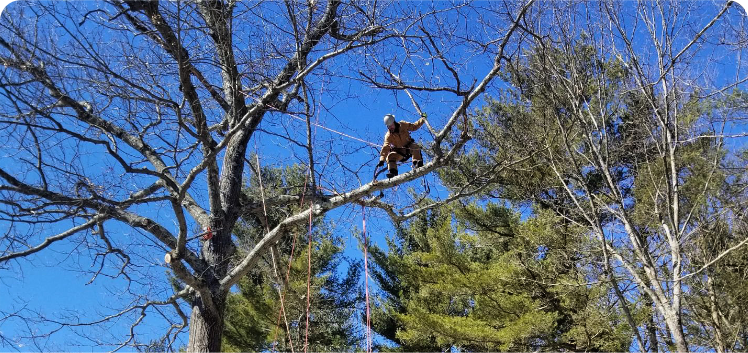
Regular tree maintenance is needed in order to ensure the: health, structural integrity, and prolonged life span of trees. This includes a full assessment of the tree’s systems: soil, root crown, structural integrity, and foliage.
Many of Hilltown Tree & Garden’s clients are homeowners interested in the preservation or restoration of their existing gardens. Jim meets the clients to establish priorities and determines the amount of hours per week that will be needed to meet all the objectives.
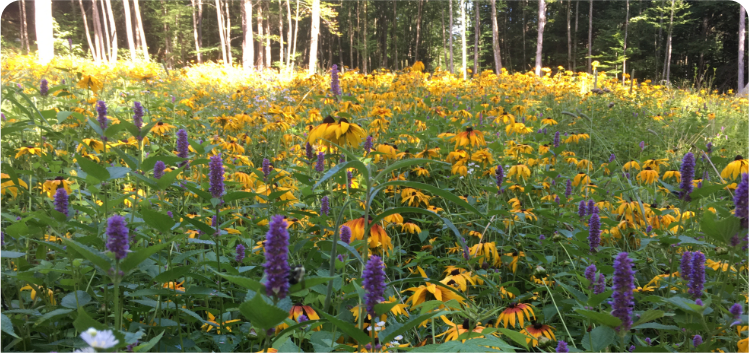
Some clients have landscapes that extend beyond the garden and into the fields and forest edge. They have the tools and expertise to reclaim these areas. This will increase the aesthetics and bio-diversity of the reclaimed areas.
From the start to the conclusion of our tree and ornamental shrub project with Hilltown Tree and Garden we were extremely pleased. We met with Jim, the principal, and within minutes of beginning to talk with him we sensed that we would be in good hands. He spent well over an hour walking the property with us, demonstrating his deep knowledge of trees and detailing the sorts of things he would recommend we do to preserve and enhance the care of our new property. He provided a detailed written estimate (it was not inexpensive) and went carefully through each item with us. Each and every person who worked on our property (and it was a big job that spanned several weeks) was cordial, quiet, careful and considerate in addition to being genuinely friendly. Jim was in touch frequently and came out and walked the property with us when we requested it, and at certain other points during the process so that we always knew the state of things. It was a pleasure to have his crew on the property. So much so, that we hope to use them for our ongoing landscape needs. Highly recommended.
— Rebecca H.F.
Amherst, MA
We’ve had a relationship with Jim and team for over five years. Honest, reliable, and knowledgeable. We trust Jim to take care of our property like it is his own.
— Ben M.
Ashfield, MA
We have worked with Jim and Hilltown Tree & Garden several times over the last four years. Jim is an expert in his field, combining the science of tree care with considerations of natural aesthetics. We’ve entrusted him with projects that span the cabling of century-old trees, periodic tree care and trimming, and removal of invasive vines. His crew is excellent: they are knowledgeable, hardworking, and friendly. When they arrived on a recent morning and our car wouldn’t start, they pitched in to help us get things moving again–truly above and beyond. Highly recommended!